If you’re placing bets on whether quantum computing or high-performance computing (HPC) will come up on top, the answer is both.
Comparing the two is akin to comparing apples and oranges – each has its own strengths, and these strengths dictate what problems you should throw at them. Even if the best choice is a quantum computer, it’s going to need an HPC to work effectively.
Many algorithms, such as Shor’s algorithm, would take a million years on a supercomputer no matter how advanced it was. Because of its nature, a quantum computer is better suited for cryptography, which is a key driver of government interest – it has the potential to break existing encryption. Other domains that have a keen interest in quantum computing capabilities are chemistry, materials research, and Wall Street to chart finance scenarios.
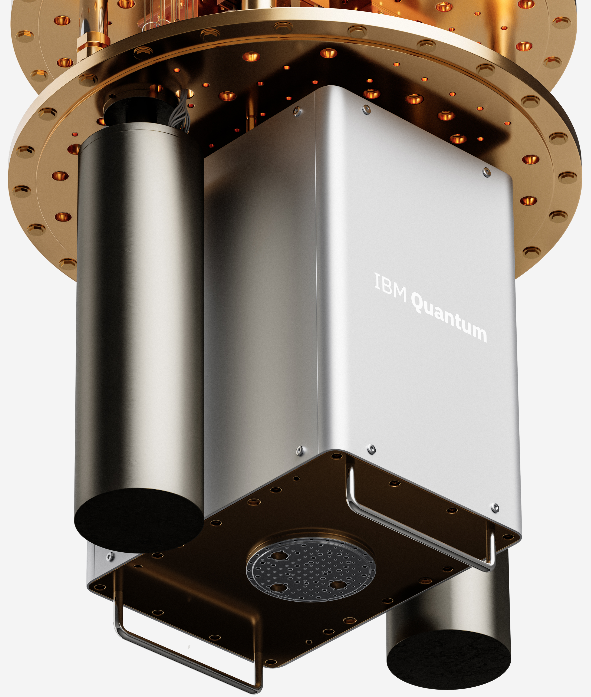
At the heart of quantum computing hardware is a qubit chip. Qubits are very fragile, and they lose their information very quickly. This loss can occur within microseconds, and that is why a classical HPC is complementary to a quantum system – a traditional supercomputer is required to do the necessary error correction.
Some problems are naturally quantum problems, such as chemistry, and not all problems are one or the other – parts of a difficult application might be farmed out to a quantum computer while others are best solved by a classical supercomputer. A quantum computer can be viewed as an accelerator of an HPC system.
Universities play a key role in helping to develop quantum computing technologies. An interdisciplinary team at UMass Amherst is responsible for designing the infrastructure to support future city-scale quantum networks, one of four core thrust areas overseen by the National Science Foundation’s Center for Quantum Networks.
Both Intel and IBM are collaborating with universities to advance quantum computing. More than 100 institutions are members of the IBM Quantum Network, including Cern, and several have dedicated systems.
Read my full story for Fierce Electronics.
Gary Hilson is a freelance writer with a focus on B2B technology, including information technology, cybersecurity, and semiconductors.