Remembering Star Trek Author Peter David

Star Trek was a big part of my adolescence, which means so was Peter David.

Having already read several of his Star Trek novels, I vividly remember walking into a comic bookstore in the fall of 1989 and discovering there was a new Star Trek comic book series – two, in fact. The original series comic, the second for DC, was being written by David, while Michael Jan Friedman was handling writing duties for Star Trek: The Next Generation. The original Trek comic was set just after Star Trek V: The Final Frontier, which was a disappointing movie, but a good spot to set new adventures.

David was one of the most prolific writers during the late eighties into the early aughts when it came to writing Star Trek fiction. One of the things that I loved about his writing is that he made you believe that the Star Trek universe could be seriously changed despite it being tie-in fiction and that it really couldn’t contradict on-screen episodes.

Even though none of your regular characters were in serious jeopardy, the stakes were always high in David’s books. His Star Trek books tended to be big grand stories; rarely did he just write an episode-of-the-week style novel, and he always did a great job of using Star Trek lore in his novels and comic storylines.

Vendetta is an excellent example of a “big” Star Trek book, which I guess is why they called it a “giant novel” when it came out. It remains one of the greatest Borg stories and better than a lot of the Borg stories that have since been written and put on the screen. I prefer Vendetta over Star Trek: Picard‘s final season or any of the takes that Voyager did with the Borg.

Vendetta is notable because not only is it a Borg story, but it features the planet killer doomsday machine first seen in the original series. David’s concept for the novel was that the Doomsday Machine from the original series episode was in fact designed to be a Borg killer. It even had a pilot. He even references the nanites from the TNG episode “Evolution,” who lawyered up when they found out that Starfleet wanted to use them as weapons against the Borg.

It’s been years since I’ve read Vendetta. I feel like I want to read it again.

It was David who suggested that Q from The Next Generation and Trelane from the original series episode “The Squire of Gothos” were of the same species for his novel Q-Squared, and he also wrote a book about Q versus Lwaxana Troi, who gains the power of the Q.

(Riker: “She’s really beating the stuffing out of him. What do you think we should do?”

Worf: “Sell tickets.”)

This was typical of David’s humor. His books were funny, but they were also emotional, and again, big in scope.  

David was also notable for creating his own Star Trek series, New Frontier, which includes many well-liked characters who appeared once or twice on TNG and formed the crew of the U.S.S. Excalibur under Captain Mackenzie Calhoun. It was probably the most diverse crew that Star Trek had seen at that point, and it was infused with David’s humor and big plots over the years.

My sense is that David and some of his peers at the time have fallen out of favor with Star Trek book editors, but his work on the Star Trek comics under editor Bob Greenberger are one of the reasons I’m a comic book reader because every time I opened a Star Trek comic book, there were ads for all sorts of DC titles, such as Green Lantern, Doom Patrol, Sandman and Legion of Super-Heroes.

I thoroughly enjoyed the seven-issue Atlantis Chronicles mini-series written by David as well as his run on Supergirl, but otherwise I’ve not read much of David’s non-Trek work; I’ve always meant to read his run on the Hulk character.

David’s had been failing for many years, and it was sad to see that he didn’t get the support from the comics industry, which is a common theme, even if you’ve created original characters.

It feels like an end of the era, and his passing is a reminder that life is short. Rest in peace, Peter David.
Under A Yellow Sun proves comic books’ literary value [Byline]

The first publication to print my work was the Ottawa Citizen as part of its “High School Confidential” section. Nine of my articles were published from 1993 to 1994. Two decades after writing this review of a Superman graphic novel, I took a course on writing comic books.

To most of us, comic books are a medium best left to youngsters.

Since their creation, comics have been very much maligned — both as children’s entertainment and as a form of literature. It is only recently that comics have proven to be popular to an “adult” audience — although loyal readers will tell you that this has been the case for quite some time.

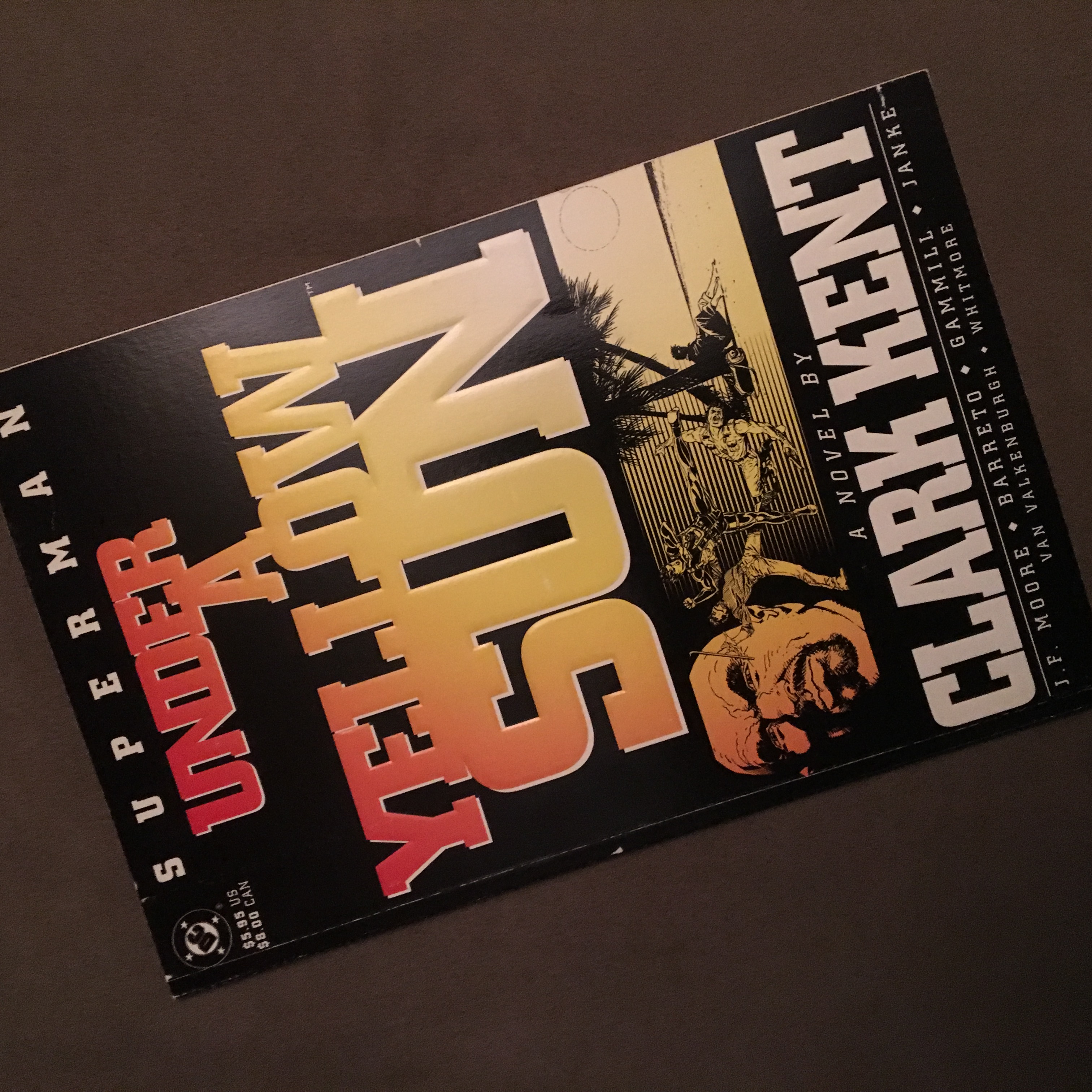
Under a Yellow Sun was a prestige graphic novel published by DC Comics

As recently reported by Michael D’Acosta here in the Citizen, “adult” is not meant in a lewd sense. It merely describes a mature readership that wishes to read thought-provoking and complex stories in a comic book format. Examples of these comics are such titles from DC’s Vertigo line as Sandman and Shade, The Changing Man, and independent titles such as Madman Comics.

Of course, the majority of comic books are still Action/Adventure Super-Hero books, but there are also a few that fall in between. Superman has been at the forefront of the action titles for years, but interestingly enough, the Man of Steel recently appeared in a story that wasn’t just an “action/beat-the-villain” story.

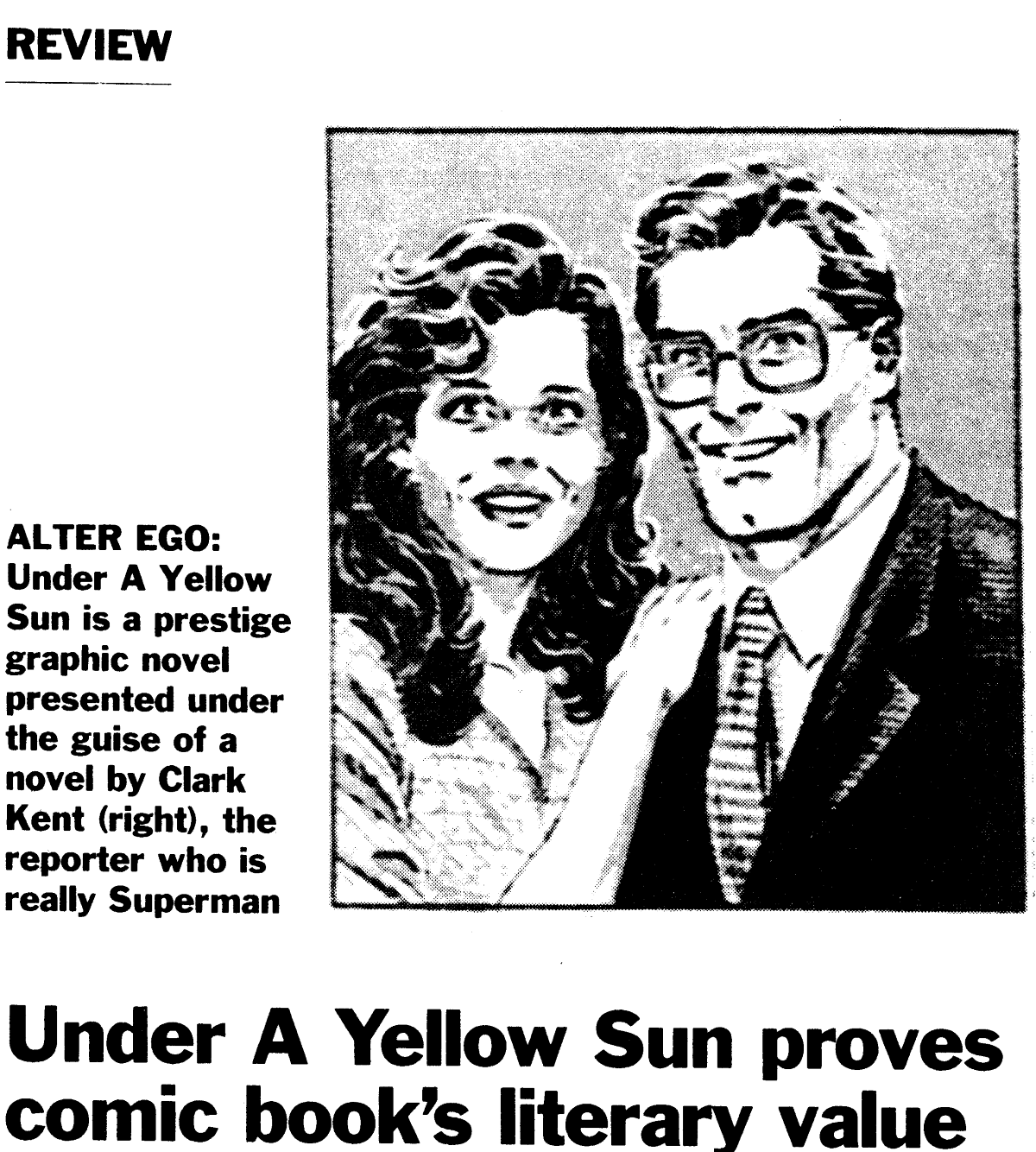
Entitled Under A Yellow Sun, this prestige graphic novel from DC Comics is presented under the guise of a novel by Clark Kent, reporter with the Daily Planet. Clark is desperately trying to finish his second novel, which his agent expects to be completed in a week. The story line of the novel concerns an ex-marine named David Guthrie, a man so desperate for work that he unknowingly takes a job working for a crooked businessman manipulating the politics of a small South American country.

While Clark struggles to resolve his protagonist’s situation in the novel, he also faces difficult decisions on other fronts. As Superman, he has been doing his best to stop street gangs from terrorizing Metropolis. These street gangs have been discovered to be using some very sophisticated weaponry which can be traced to Lexcorp. Superman confronts Lex Luthor, but of course, Luthor feigns ignorance.

Under A Yellow Sun proves comic books' literary value
“Under A Yellow Sun proves comic books’ literary value” was published in the Ottawa Citizen in the summer of 1994

As Clark becomes increasingly frustrated with both fiction and reality, he begins to question the values he was brought up with. What follows are the parallel stories of Guthrie and Superman as each tries to win their battles without sinking to the level of the enemy.

Under A Yellow Sun should not be dismissed as just another super-hero comic aimed at kids. The story and the morality play presented contain universal concepts and values that can reach many people at different levels. It is the type of story that you can let your children read and hope they learn from. At the same time, the story can be enjoyed by an adult audience, and it will no doubt give them food for thought.

Under A Yellow Sun is a tale of significance, and it demonstrates that comic books are not always a corrupting influence on young people’s minds, and are in fact a legitimate form of literature.

Written by John Francis Moore with art by Eduardo Barreto, Kerry Gammill and Dennis Janke, Under A Yellow Sun is available at comics specialty shops for $8 from DC Comics.

Gary Hilson is entering first-year journalism at Algonquin College.

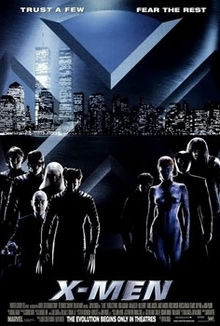
X-Men film debut rivals Burton’s Batman

I stayed up late enough last night to catch Roger Ebert’s review of the new X-Men movie and it reminded me why I never listen to movie reviewers most of the time: they have no idea how to review a genre film.

It’s not that I begrudge Ebert’s right to give a thumbs down, but why is it that the X-Men only received a minute of discussion when most movies on the show receive a lot more? I’ll tell you why: because it’s a comic book movie and people like Ebert are just too erudite to review these kinds of movies. In Ebert’s case, senility must also be a factor. He found the movie hard to follow. Better count your brain cells, Roger. He also complained there was too much focus on character development. Usually these anal retentive reviewers are complaining that there’s not enough character development and too much action.

Right now you’re probably thinking that I’m a rabid X-Men fan who will stand by his favorite mutants no matter how bad the movie may be. Wrong. I’ve never read an X-Men comic. I was a DC fan when I was younger. Green Lantern. Legion of Superheroes. Hawkman. Not X-Men. But while Ebert says the uninitiated would have problems following the movie, I had no problem at all. The X-Men is probably the best comic book movie since the first Batman, and I would hazard to say even better. This isn’t a bunch of guys in costumes taking each other on and trading one line zingers. This movie actually has depth, much more than any other comic book movie that’s been made. Not only should it be lauded for the effort of making its characters three-dimensional, it should be lauded for succeeding, with some minor exceptions.

The story is primarily told from the eyes of a teenage girl named Marie (aka Rogue), played by Anna Paquin, and Logan (aka Wolverine), played by Hugh Jackman. Rogue discovers early in the movie that she will drain the lifeforce out of anyone she touches and heads north, where she runs into Logan. Logan has the ability to heal very quickly from any wounds and has also been implanted with an indestructible metal, providing him with razor sharp claws. They are just two of many mutants in the world who are feared by the general public. A US senator (Bruce Davison) is leading the push to pass a bill that would force mutants to register. Professor Charles Xavier (Patrick Stewart) has hope that humanity will learn to accept mutants, but his old friend and now nemesis, Eric Lencher (aka Magneto), played by Ian McKellen, believes that the only recourse is to make sure mutants end up on top no matter what the cost. His mutants attack Wolverine and Rogue, but they are rescued by Xavier’s own X-Men, Storm (Halle Berry) and Cyclops (James Marsden).

Xavier runs a school for gifted youngsters, also a haven for mutants. He promises to help Wolverine unravel his past. The difference between mutants and superheroes is that mutants are persecuted, and in some cases a danger to themselves as well as others, whereas superheroes such as Superman were instantly idolized for their heroic abilities. The movie deals with this aspect in a thoughtful manner and the issue of racism, albeit on a simplistic level. Magneto as the villain is not just some guy who’s gone wacko like the villains in the Batman films. His motivations are very human. Unfortunately the mutants that have sided with him lack depth: the shape changing Mystique (Rebecca Romjin-Stamos), Toad (the Phantom Menace’s Ray Park) and Sabretooth (Tyler Mane) are all just two-dimensional baddies.

The X-Men is a very entertaining movie that’s well cast and well-plotted, balancing the character development and the action scenes. Don’t listen to the stuck up reviewers: they just don’t get it. And any die hard X-men fan I’ve spoken to has loved the movie and says it’s true to the original comic book legacy that inspired it. This X-Men virgin thinks it’s the best movie of the summer.

Gary Hilson is a writer, editor and digital media specialist for hire. He lives in Toronto.